Step Zero
I am, by nature, a deductive thinker. I like to start at the top – big picture, lots of inputs – and work my way down to a conclusion. My brain runs like a workflow diagram: if/then branches, yes/no gates, one step feeding the next. Give me a problem with a clear starting point and I'll walk you through it, one node at a time.
That's how a lot of product work operates – the later phases, at least. Once you bring in design and stakeholders, once you're building roadmaps and writing requirements, it's linear. One step feeds the next. I'm comfortable there.
But even in my product work, I've always known there's a stage before any of that begins – a step zero. It's not a workflow. It's dwelling with the problem and the people who experience it. Sitting in it. Developing empathy not by following a process, but by feeling your way through someone else's reality until the right questions start to surface. I can't diagram that. I've tried.
And to do phase zero well – to genuinely sit in the ambiguity and complexity of another person's experience without rushing to solutions – you have to become a certain kind of person. You have to develop patience you might not naturally have, curiosity that goes deeper than surface-level discovery, and the ability to hold contradictions without forcing them into a framework.
That becoming is what I've started calling step zero. And if I had to visualize what it looks like, it wouldn't be a flowchart. It would be a chord diagram.
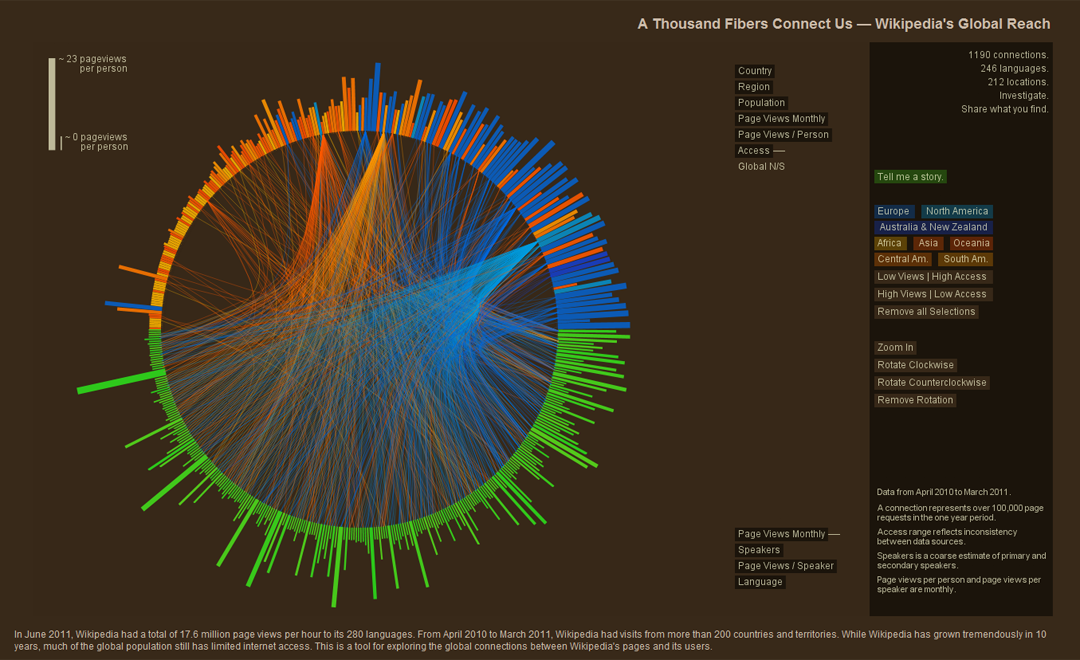 A chord diagram – dozens of arcs connecting nodes across a circle, showing relationships that can't be reduced to a linear path.
If you haven't seen one before, a chord diagram shows relationships between multiple points simultaneously. Every node connects to several others. The connections overlap and cross. You can't trace a single path through it because everything is interconnected, and the picture gets richer and more complex as you add data.
That's what this work of becoming looks like. You're developing patience while sharpening your curiosity while learning to hold complexity while building the kind of empathy that doesn't flinch when the problem turns out to be messier than the brief suggested – and all of those things feed each other in ways you can't predict or sequence.
I just celebrated the one-year anniversary of launching my business, Fieldway. As I've reflected on the last two years – I really started thinking deeply about this work in February of 2024 – the word that keeps coming back is becoming.
Not building. Not launching. Not scaling. Becoming.
Becoming the type of thinker and communicator that product leadership requires. Becoming the type of person who can sit in a room with a struggling team and figure out what's actually wrong instead of reacting to symptoms. Becoming someone others want to work with – not because of a title, but because of who I am when things get hard.
If I'm honest, this work didn't start two years ago. It started in high school. Maybe earlier. Becoming the type of man I needed to be to be a good husband and father. Becoming the type of leader my teams needed when everything was going sideways. The timeline is longer than any project roadmap I've ever written.
Here's what I've come to believe: before the linear work of product management can begin – the research, the problem discovery, the roadmapping, the design, the engineering – there is a step zero. It's the work of becoming the type of person who can do those things well.
Step zero isn't a checklist. It's not a framework you can put in place in a sprint. I hesitate to call it a creative process, but it's certainly not a workflow I can chart. It's messy and beautiful and deeply human. And the more I dwell in this space, the more I fall in love with the questions it raises – the challenges, the messiness, all of it.
In Brandon Sanderson's The Stormlight Archive, one of the foundational oaths begins with a simple acknowledgment: Journey before destination. Life before death. How we travel matters as much as where we arrive.
About fifteen years ago, I had a team at Missouri State University that had just come through a terrible couple of days. Multiple people making big mistakes. Everything going sideways. When I gathered them in a conference room, I told them two things.
First: we need to learn from what happened.
Second: on a cosmological scale, these problems are a blip. Two hundred years from now, nobody will remember them.
Fifteen years later, I can confirm that's true. I don't remember what any of those mistakes were. Not one. What I remember is how we took care of each other. How we poured into each other's development. How we helped each other become better at what we were doing and who we were doing it for.
That's what endures. Not the deliverables or the deadlines or the fires we put out. The becoming.
That's what this site is for.
I'm building Step Zero as a place to think out loud about the work that comes before the work – the development of judgment, empathy, diagnostic thinking, and honest communication that product leadership demands. I've spent the last year consulting and mentoring others through this same kind of growth, and I want to bring more people into the conversation.
There are no silver bullets here. No five-step frameworks that promise transformation by Friday. This is a long game. What I can offer is honesty about what this work actually looks like, specifics from my own experience and the leaders I work with, and a genuine belief that the growth is the purpose – not just a means to an end.
I want to explore this with you. Not lecture at you – explore it together. Because I'm still becoming, too. I'll take you along as I think through these questions, and I hope you'll push back and challenge me when I'm wrong.
If that sounds like something worth your time, stick around. This is step zero.
Related Posts

Don't give your AI a name
Naming your AI agent feels harmless, but it quietly breaks the two things your team needs most: ownership of the work, and their own footing.

Ask the Dumb Question First
Asking what a Lambda is buys you the right to ask why this one and not another. Bloom's Taxonomy, applied to the meetings where decisions get made.
A cheap yes that leads to an expensive no
Fail fast was a rational strategy when research was expensive. That stopped being true, and shipping to find out is now the costly way to learn.